The permit application filed this past June for 2100 Jackson Street reads, on its face, like a modest ask. The owner wants to split a ground-floor unit into two apartments, combine the penthouse with the top-floor studio, and refresh the rooftop deck and windows on the Beaux-Arts tower Conrad A. Meussdorffer designed in 1923 for Joseph Levin. The application itself is fairly straightforward, proposing no major expansion or changes in unit capacity, with the developer seeking to split the ground-floor unit into two apartments and combine the penthouse with a top-floor studio unit. No new floors. No added units. Just interior reconfiguration and cosmetic work.
Buried inside that modest scope, though, is a line that changes the math entirely: the project will require structural retrofitting to mitigate issues presented by the non-ductile concrete process used by the original builders. A building's age, not its ambition, is what determines how long its owner waits.
That distinction is the one most Pacific Heights buyers get backward.
The line buyers draw in the wrong place
Ask a prospective buyer whether a Pacific Heights home is "historic" and most will answer by checking for a landmark plaque or a mention in the listing description. If neither shows up, they assume the renovation timeline will move like it would anywhere else in the city. That assumption is wrong for one simple reason: California's environmental review law does not care whether a building has been formally designated. It cares how old the building is.
Most historic buildings in San Francisco are not yet officially designated as landmarks or historic resources, and even non-designated historic buildings must undergo state-mandated CEQA review before permits for alteration can be granted. The threshold that triggers this is age, not paperwork: buildings not officially designated as historic but constructed over 50 years ago may be considered potential historic resources under CEQA.
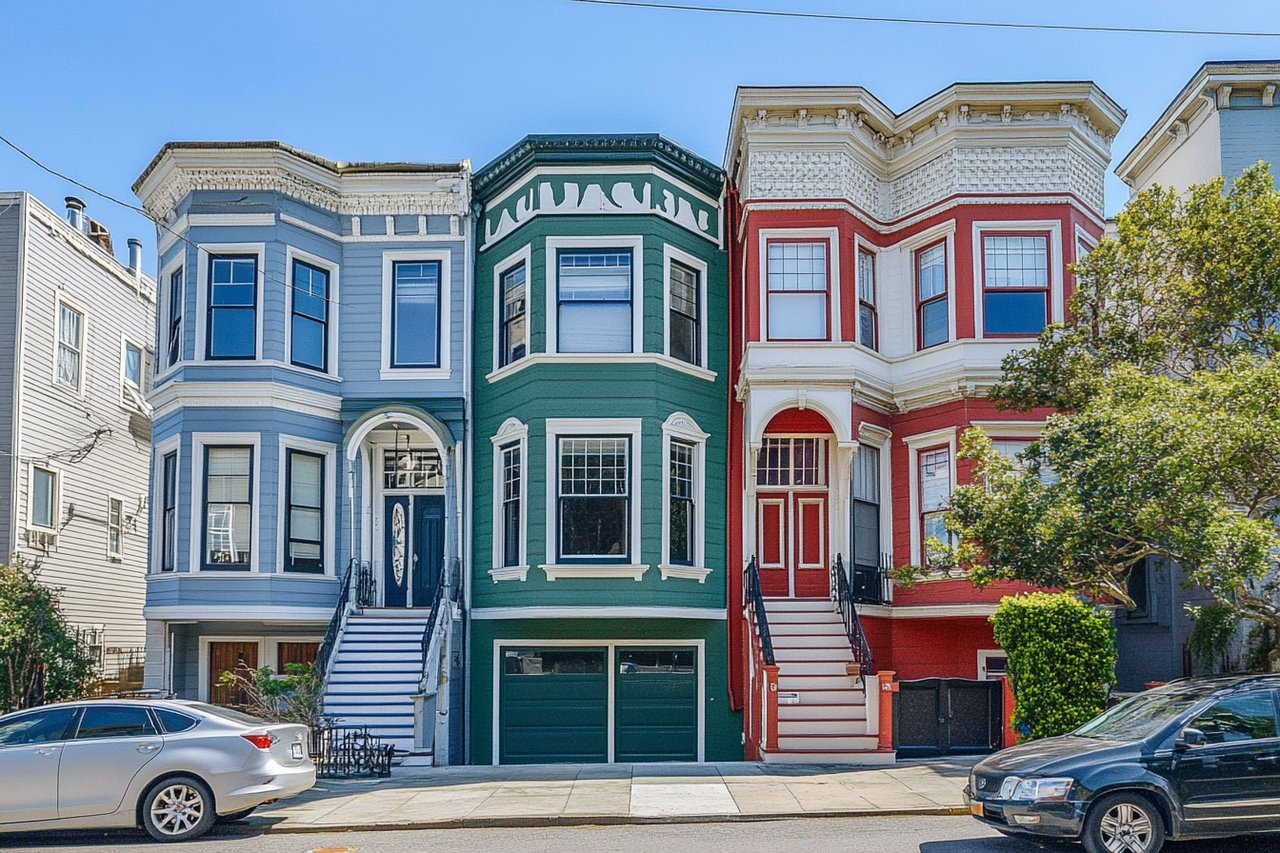
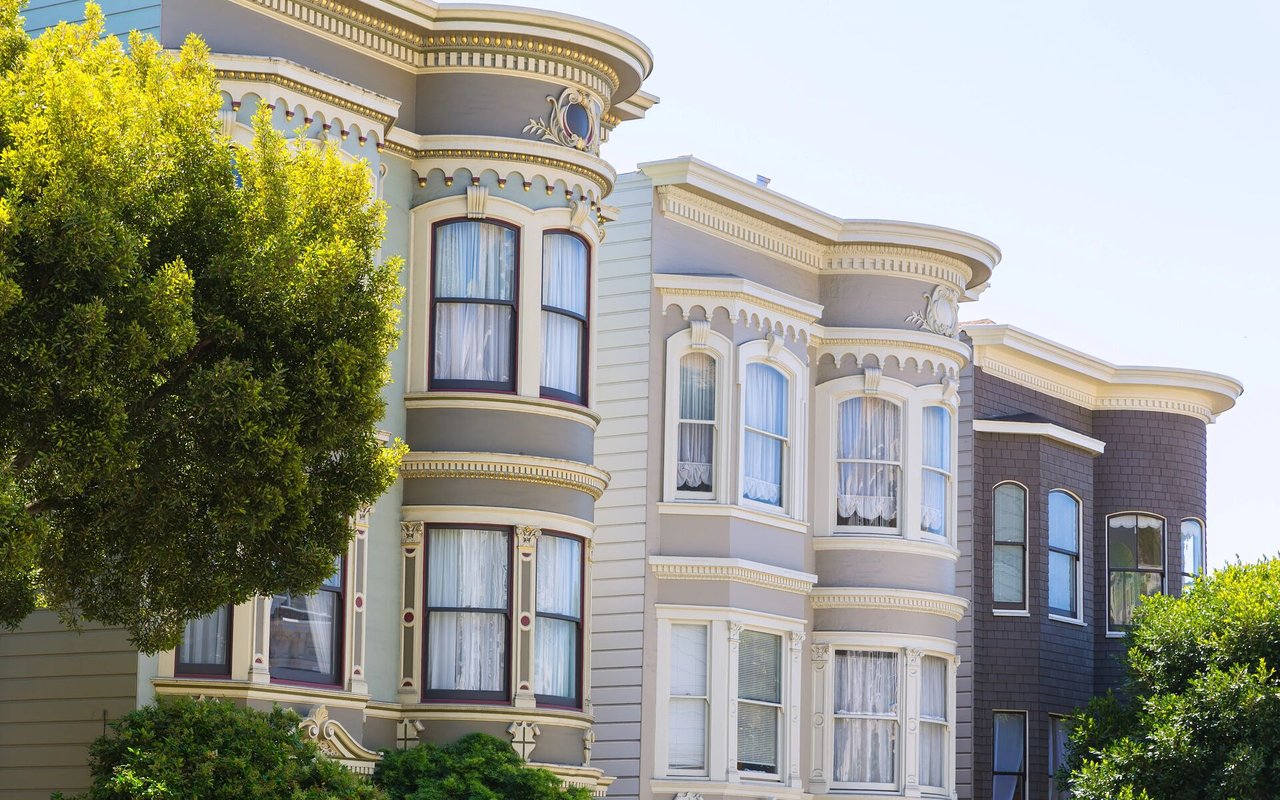
Pacific Heights fails that test on almost every block. The neighborhood is defined by grand Victorian and Edwardian residences built mostly between the 1880s and 1910s, having survived the 1906 earthquake largely intact, with Italianate Victorians, Queen Anne mansions, and Edwardian flats lining the streets between Lyon and Van Ness. A home doesn't need a plaque to trigger review. It just needs to be older than 50, which in this neighborhood is nearly a tautology.
San Francisco sorts every parcel into a review category to manage this. Most properties in the city are category B, and if a category B property is changing its front facade, the building permit application may trigger a Historic Resource Review as part of the Department's Environmental Review. A property owner isn't required to wait and find out during plan check. Before filing a permit, an owner can file a Historic Resource Review to determine whether the property is category A or C instead, which settles the question up front rather than mid-project.
Even buildings not officially designated as historic but constructed over 50 years ago may be considered potential historic resources under CEQA.
That single sentence is worth reading twice if you're comparing a 1908 Edwardian on Broadway to a 1970s infill condo two blocks away. Both sit in Pacific Heights. Only one of them starts the renovation clock at zero.
Formal landmark status, by contrast, is the smaller and more predictable category. San Francisco has over 300 designated Article 10 Landmarks and over 1,110 lots within designated Article 10 Historic Districts, and over 3,300 parcels citywide are listed in or eligible for listing in the California Register. Those numbers sound large until you compare them to the housing stock of a single neighborhood built almost entirely before 1910. Landmark status is the exception buyers know to look for. The 50-year rule is the default they don't.
Two very different renovation clocks
Once a project clears intake, it runs on one of two tracks, and the gap between them is not small.
- The fast lane. A standard interior remodel with no facade change and no Planning trigger moves quickly. Current permit-tracking data shows a standard kitchen and bath remodel in a single-family home with no Planning triggers issues in roughly six to twelve weeks as of June 2026. For a larger scope, plan review on major renovations and custom builds in Pacific Heights specifically typically takes 8 to 16 weeks, depending on project scope and whether Planning Department review is triggered.
- The long lane. Anything that draws environmental or discretionary scrutiny moves on a different clock entirely. A new building or anything that draws a Discretionary Review can sit for two years or more, and the same source notes the averages in San Francisco are wrecked by the long tail, since a handful of major projects in years-long Planning review pull the mean way up while the mean is dramatically higher because of long-tail outliers, projects that stall in CEQA, EIR, or appeals.
There is no gradual slope between those two lanes. A project either clears without triggering historic review, in which case it moves in weeks, or it trips the CEQA wire, in which case the clock resets to a different unit of measurement entirely. For a Pacific Heights buyer budgeting a summer kitchen remodel around a fall move-in, that's the gap between a plan that holds and a plan that quietly falls apart around month four.
What one Jackson Street permit shows in miniature
The 2100 Jackson Street file is useful precisely because it shows both lanes at once, on the same building, within the same ownership.
The tower has a documented history that makes its age impossible to ignore. The apartment complex was built in 1923, in a Beaux-Arts style designed by Conrad A. Meussdorffer for Joseph Levin, and Meussdorffer, the son of German immigrants who moved to the city in 1853, is best remembered as the architect of choice for the wealthy elite in early 20th-century San Francisco, having also designed St. Regis Apartments in Lafayette Park, 2006 Washington Street, and 2500 Steiner Street. Maurice Kanbar, the creator of Skyy Vodka, purchased the building in 1996 for $4.6 million and later invoked the Ellis Act to evict all rental tenants in a highly publicized move to convert the tower into a personal residence. After Kanbar, the property sold for $17.5 million comprising 12 units, with buyer Oz Erickson planning to transform the historic building into a communal living space for friends.
That earlier plan already assumed the long lane. The renovation Erickson described in 2023 was projected to take roughly two years, which lines up with the outer bound permit data shows for anything that draws full discretionary or CEQA review.
What's filed now, under Erickson's Emerald Fund, is a narrower scope than that original vision. Emerald Fund is the new owner responsible for the current application, with OpenScope Studio as project architect and IMEG Corporation as structural engineer. And even this trimmed-down version still carries the retrofit requirement for non-ductile concrete, because the building's age doesn't shrink along with the scope of the ask.
The more telling data point is what got dropped entirely. In May 2026, Emerald Fund withdrew its 2024-filed plans to add four floors to the 1924-built detached garage, which would have added four more apartments and a new structure overlooking Laguna Street. The interior work stayed. The vertical addition didn't survive. That's the two-lane system operating exactly as designed: modest, code-driven work proceeds, and the ambitious expansion gets shelved rather than fought through years of review.
Before you write the offer or the listing
For a buyer evaluating a Pacific Heights property with renovation plans already sketched out, the age of the structure matters more than whether the listing calls it historic. A Historic Resource Review filed before you're in contract, or built into your contingency period, tells you which lane you're in before you've committed to a closing date around a kitchen that may or may not exist by then.
For a seller, the same logic runs in reverse. A property that has already cleared category status, or one where a prior owner already secured a Certificate of Appropriateness for exterior work, is a materially easier sell to a design-conscious buyer than one where that question is still open. Article 10 Landmarks require a Certificate of Appropriateness or Administrative Certificate of Appropriateness in addition to regular building permits for any exterior alteration requiring a permit, and knowing that answer before a buyer's inspection period, rather than during it, is the kind of preparation that keeps a transaction on schedule.
A short FAQ
Does every Pacific Heights home need a historic resource review? No. Category C properties don't require one. But given how much of the neighborhood's housing stock predates 1920, category B, the tier where a facade change can trigger review, is the more common starting point.
Can I find out a property's category before making an offer? Yes. An owner or prospective buyer can request a Historic Resource Review determination ahead of any permit filing, which settles the category question independent of the renovation itself.
Does landmark designation always mean a longer timeline? Not necessarily longer than the CEQA-triggered path, since landmark status comes with a defined review process through the Historic Preservation Commission. The open-ended timelines tend to come from non-designated buildings working through the CEQA determination for the first time, with no prior review on file.
Renovation math in Pacific Heights starts with a question most comparable neighborhoods don't ask in the same way: not what you want to build, but how old the walls already are. If you're weighing a purchase with renovation plans attached, or preparing a Pacific Heights property for market, Deason Group can help you read the permit history before it becomes your problem to solve mid-escrow.