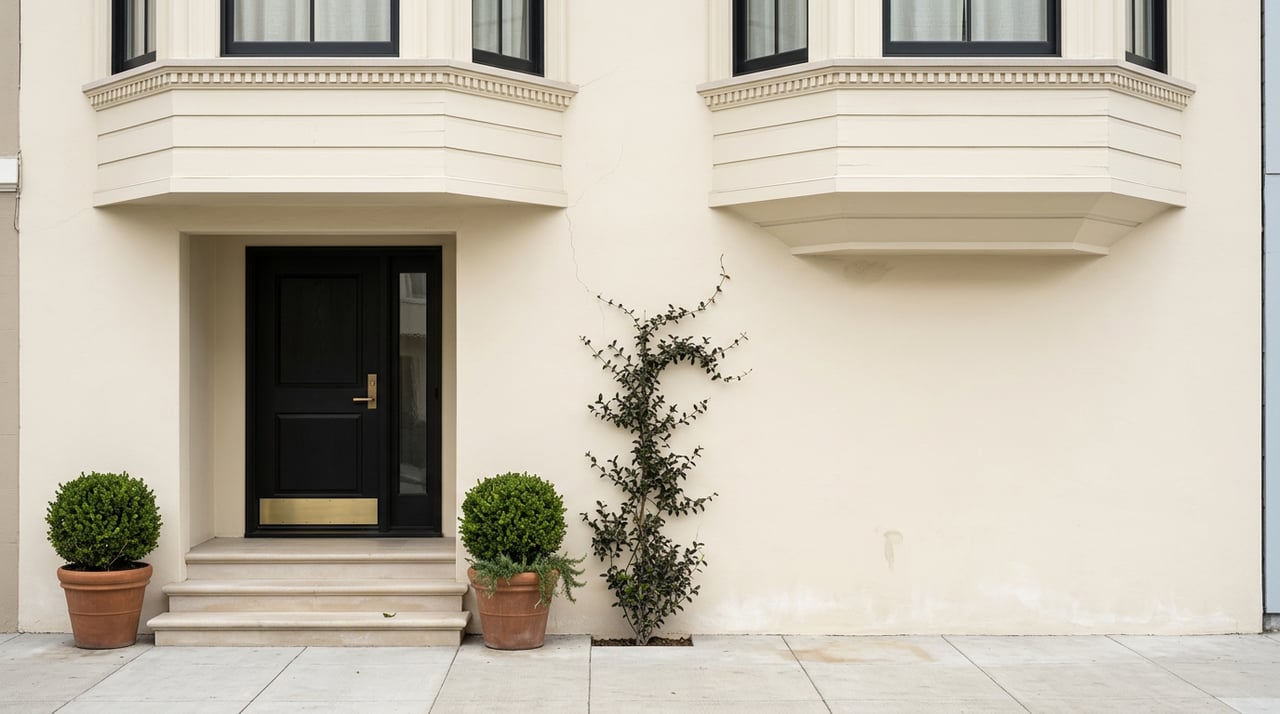
If you own half of a Castro two-unit building and you have been telling yourself you will convert to condo "someday," the calendar just started charging rent on that decision. The San Francisco condo conversion lottery for three and four unit buildings has now sat on hiatus since 2020, and the expected 2024, 2025, or 2026 return has not arrived. For most Castro owners, the two-unit bypass under San Francisco Planning Code Section 1396.3 is the only reliable path to a separate title, and the numbers finally justify using it.
That last part is new. For several years the condo premium over a comparable TIC was compressed enough that the conversion cost, the twelve month owner-occupancy discipline, and the paperwork all argued for staying put. In 2026 the spread is widening again, and the widening is concentrated in the exact ZIP code the Castro sits inside.
The clock most owners forget is already running
The bypass sounds simple on paper. Two units, two separate owners, each occupying their own unit as a primary residence for twelve consecutive months immediately before filing. No lottery. No annual cap. An administrative track through the Department of Public Works.
The trap sits in the word "consecutive." The twelve month owner-occupancy clock resets if either owner moves out, even temporarily. A three month sabbatical rented to a friend, a stint at a partner's place across town during a renovation, a summer sublet to cover a job change, any of these restart the counter from zero. Owners who assume their five years of ownership automatically qualify them are the ones who lose six to twelve months at the plan-check stage learning otherwise.
Two more disqualifiers sit alongside the reset:
- Any Ellis Act eviction in the building within roughly the last ten years generally disqualifies the property from conversion entirely.
- Buildings with five or more residential units are not eligible for conversion at all, and the paused lottery, when it eventually returns, will be open only to three and four unit buildings.
For a five or six unit Castro TIC building, in other words, the exit today is a TIC resale. Not a conversion. That single fact reprices a large slice of the Castro's small-building stock.
Why "wait for the lottery" stopped being a plan
The Castro's residential fabric is disproportionately two to four unit buildings, much of it Victorian and Edwardian stock that survived 1906 and was later carved into flats and TICs. The historical script for those owners was to enter the annual lottery, accumulate tickets, and eventually win a conversion slot. Buildings that lost each year got more tickets the next.
That system produced roughly sixty converted buildings a year when it operated. It has now been paused for six years, and even at the most optimistic reading of the sunset provisions there is no confirmed relaunch date. Meanwhile, three and four unit TIC owners who were counting on it have kept their capital locked in a fractional loan product while the underlying property values moved.
The two unit bypass is the release valve that still works. It is administrative, it has no annual cap, and it does not depend on a random draw. The tradeoff is discipline. Both owners have to keep their heads down and their addresses stable for a full year before filing, and neither can have triggered an Ellis Act event in the recent past. That is not a low bar. It is a bar most cooperative two-unit buildings can clear if they plan for it.
What the premium actually looks like right now
Here is what changed in 2026. The 94114 ZIP code, which contains the Castro and part of Noe Valley, posted the largest year-over-year condo value gain of any Bay Area ZIP code, roughly 3.9 percent on Zillow's typical-value index, in a year when condo values across most of the region were flat or falling. Citywide, the San Francisco Association of Realtors data showed the condo, TIC, and co-op median at $1,377,500 in April 2026, up 17.5 percent year over year, with closed condo sales up 24.8 percent and active listings down roughly 32 percent.
Castro specifically ran hotter. Over the three months ending May 2026, the neighborhood's median sale price sat at $1.5M, up 7.9 percent year over year, with a median twelve days on market and an average sale-to-list ratio of 112.8 percent. That last number, more than any median, is the tell. Buyers are clearing well above ask on the assets that trade cleanly.
Trade cleanly is the operative phrase, because the recent comp set inside 94114 shows two very different market experiences depending on title:
- 143 Collingwood Street, a single-family, closed June 8, 2026 at $4,850,000 against a $3,695,000 list, 31 percent over ask in 24 days.
- 57 Ford Street #57, a small condo, closed June 3, 2026 at its $1,050,000 list price in a single day on market.
- 214 Castro Street, a two-unit-building condo, closed April 27, 2026 at $1,975,000.
- 281–283 Castro Street, a two-unit building, closed July 13, 2026 at $4,550,000, 3 percent under a $4,700,000 list after 63 days.
The gap between "clean title, clears fast" and "unconverted small building, sells slower and at a discount to list" is not a footnote. It is the case for the bypass.
The historical TIC-to-condo discount ran roughly 10 to 20 percent, with a 5 to 15 percent premium being the more common working number for otherwise-identical units. When condo values were falling, that spread compressed and the bypass math looked marginal. In 2026 the spread is opening back up, and it is opening in the buildings the bypass was written for.
The five friction points that decide the outcome
For a Castro two-unit owner sitting down with their co-owner in the third quarter of 2026, the decision is not "convert or don't." It is a sequence of five questions, in order, that determine whether the bypass is worth the eighteen months it takes from clock-start to closing.
- Occupancy integrity. Has either owner spent any night away from the unit as a primary residence in the last twelve months in a way that a tax return, a driver's license, or a utility record would contradict? If yes, the clock has not started. Fix that first.
- Ellis lookback. Has anyone in the ownership chain filed an Ellis Act in roughly the last ten years? If yes, the bypass is likely off the table and the strategy shifts to a TIC resale.
- Cost against premium. Conversion runs roughly $15,000 to $40,000 per unit in surveyor, attorney, and DPW fees. Against a 5 to 15 percent condo premium on a $1.5 million to $2 million Castro unit, that is a $75,000 to $300,000 gross uplift before costs. The spread justifies the work in most cases in this ZIP right now. It did not, uniformly, in 2023.
- Financing ceiling. The 2026 San Francisco high-cost conforming loan limit for single-unit properties is approximately $1,209,750. TIC fractional lenders sit outside that window and price accordingly. A converted unit qualifies for conventional pricing up to that limit, which is the mechanism behind most of the observable premium.
- Timeline against the market. The bypass application typically runs six to twelve months at DPW after filing, on top of any months needed to complete the twelve-month occupancy clock. An owner starting in mid-2026 is realistically listing as a condo in mid-to-late 2027. That is a bet on the direction of the Castro condo market over the next eighteen months, not the current-quarter comps.
The order matters. Owners who start at step three, running spreadsheets on the premium, usually discover at step one or two that they were not eligible in the first place. Owners who clear one and two typically find that three, four, and five point the same direction in 2026.
The narrower case for staying a TIC
Not every building should convert. A three or four unit TIC that already has a well-priced fractional loan, cooperative owners, and no near-term sale intent may reasonably wait to see whether the lottery returns. A five or six unit building has no bypass option and should be priced and marketed as a TIC asset, with the marketing acknowledging that clearly rather than hinting at a conversion that cannot happen. A two-unit building where the Ellis lookback is not clean has a resale strategy, not a conversion strategy.
The point is that the default assumption for a two-unit Castro TIC owner has flipped. In 2023, the default was "hold, the premium is thin." In 2026, with the lottery indefinitely paused, 94114 condos leading the region, and TIC financing structurally capped below the high-cost conforming line, the default is "start the clock, unless something disqualifies you."
FAQ
How long does the two-unit bypass actually take end to end? Assuming a clean twelve-month occupancy record on the day you file, expect roughly six to twelve months at DPW for the administrative process, involving a licensed surveyor, an attorney familiar with conversion, plan-check cycles, and recording at the Assessor-Recorder's Office. Add any months needed to complete the occupancy clock before filing.
Does condo conversion remove rent control from an occupied unit? No. Conversion changes title. It does not, by itself, change the rent control status of a unit that is already occupied by a tenant. Any strategy that assumes otherwise should be pressure-tested with a conversion attorney before it drives a listing decision.
What if my co-owner is not interested in converting? The bypass requires both owners to have occupied their units for the twelve consecutive months and to sign the application. Without cooperation, there is no bypass. That conversation, and any written agreement documenting shared costs, should happen before the surveyor is engaged.
Is the lottery actually coming back? It has been forecast to return in 2024, 2025, or 2026 and has not. Planning strategy around a lottery that may or may not reappear in a form similar to the pre-2020 program is a weaker bet in 2026 than it was two years ago. The bypass is the path that is verifiably open today.
The two-unit bypass is one of the few San Francisco transaction paths where the paperwork sequence has a bigger effect on outcome than the marketing does. If you own a Castro two-unit building and want a read on whether your specific occupancy timeline, financing structure, and building history support a conversion strategy, or a cleaner TIC exit, Deason Group works this file from both sides. Contact us to talk through what your building can and cannot do before you start the clock on the wrong plan.