"Sometimes there is just zero data to work with." That's what a San Francisco appraiser with 25 years on the job told The San Francisco Standard earlier this year, describing how fast this year's price gains have outrun the comparable sales appraisers are required to lean on. He was talking about the general math of a hot market. But there's a narrower version of that same problem sitting inside a specific kind of Noe Valley property, and it has nothing to do with how quickly prices are moving. It has to do with a single word buried in a disclosure packet: unwarranted.
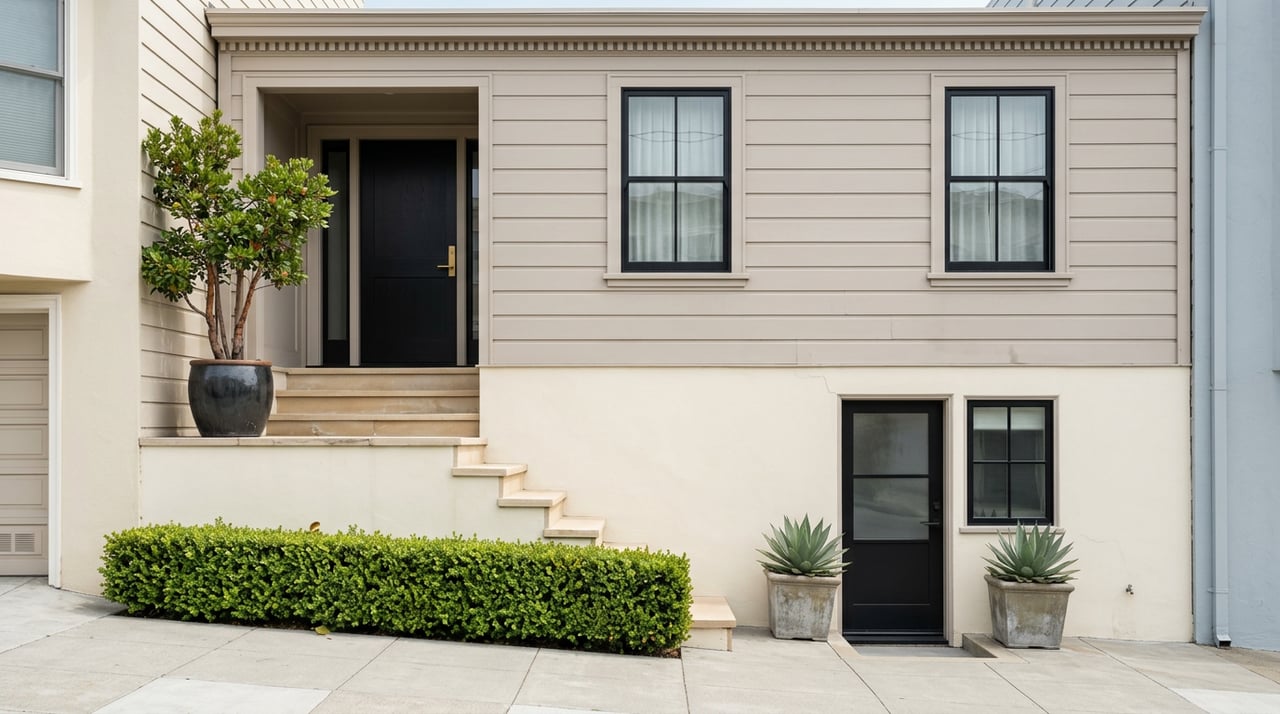
Walk the Edwardian and Victorian blocks that make up most of Noe Valley's housing stock and you'll find garden-level flats, converted garages, and small multi-unit buildings that have quietly functioned as extra housing for decades. Some of that extra space was built with permits. Some of it wasn't. When it wasn't, the city's own paperwork calls it an unwarranted dwelling unit, and that one word changes how a lender sizes a loan, how an appraiser treats the square footage, and how long escrow might realistically take. Most buyers read "unwarranted" and think illegal, tear it down. Most sellers hope it means just paperwork, don't worry about it. Neither read is right, and the gap between them is where deals get expensive.
The date on the unit is the whole ballgame
Here's the piece that surprises even experienced buyers: San Francisco doesn't have one path to legalize an extra unit. It has three, and they don't overlap. Which one applies to a specific Noe Valley in-law unit depends entirely on when it was built, a fact that's often undocumented, half-remembered, or simply lost to a prior owner who's no longer around to ask.
| Pathway | Who runs it | Which units qualify | The mechanic that matters |
|---|---|---|---|
| SF Dwelling Unit Legalization Program | SF Planning and Dept. of Building Inspection, under Planning Code Section 207.3 | Unit must have existed before January 1, 2013 | One unwarranted unit per lot, waives select Planning Code standards, still requires life-safety compliance |
| California State ADU Program | SF Planning, under state Government Code | Any unit meeting the ADU or JADU definition, reviewed ministerially | No blanket amnesty for age; the unit has to meet current ADU standards or seek waivers |
| AB 2533 State Amnesty | Same review process, added by state law effective January 1, 2025 | Unit built before January 1, 2020 | City can't deny the permit for lack of prior permits alone, only for true health and safety hazards |
Look at what that table actually implies. A garage conversion from 1985 doesn't qualify for San Francisco's own legalization program, because that program stops at 2013. But it very likely qualifies for the state's AB 2533 amnesty, because that cutoff runs all the way to 2020. Two different governments, two different cutoff years, and picking the wrong door first can cost a homeowner months they didn't need to spend. This is the kind of distinction that rarely makes it into a general ADU explainer, because most of those are written for the whole state, not for a city that layered its own decade-old program on top of newer state law.
Why the appraisal gets strange before the legalization does
An unwarranted unit doesn't just complicate a legalization application. It complicates the sale itself, often well before anyone files paperwork with the city.
Start with the 3R Report, the Department of Building Inspection's official summary of a property's permit history. It's one of the mandatory reports a seller hands a buyer, and it's the document that quietly tells the truth. If a building's 3R lists it as a two-unit dwelling but the seller's disclosures mention a third kitchen and bath in the garden level, that mismatch is the tell. The unit exists physically. It doesn't exist on paper. That gap is exactly what the word unwarranted is doing in a listing.
That gap follows the deal into financing. Lenders decide whether to underwrite a purchase as a single-family loan or a multi-unit loan, and an unwarranted unit sits in an uncomfortable middle: the property functions like two or three units, but the recorded unit count says otherwise. Appraisers then have to decide how to treat that extra livable space, since it typically can't be credited as legal rental income and may or may not count toward the home's official living area. In a market where, as that Standard appraiser noted, there's often "zero data to work with" for closed comparables even on straightforward homes, adding an unresolved unit count to the mix gives an appraiser one more variable with no clean precedent to point to. That's not a legal problem at that stage. It's a financing problem, and it shows up at the worst possible moment, after a price has already been agreed to.
There's a second wrinkle worth knowing before it becomes a surprise. San Francisco's Rent Board has ruled that unwarranted dwelling units fall under the city's Rent Ordinance regardless of when they were built, because no certificate of occupancy was ever issued for them. Most of San Francisco's rent control rules apply only to buildings from before 1979. An unwarranted unit built in 2005 doesn't get the pass that its construction date would otherwise earn it. Anyone weighing whether to rent out that space, before or after buying, needs to know that going in.
What 2026 actually changed, and who it favors
Two state laws took effect in January 2026 that shift the timeline in a way worth understanding if a Noe Valley legalization is already on the table.
The first is SB 543, which added what's called a deemed-approved provision: if San Francisco doesn't act on a qualifying ADU or legalization application within 60 days, the application is automatically approved. That's a real change from a process that has historically run two to four months for a straightforward case and six months or more for anything requiring a variance. It doesn't erase the work of getting an application right the first time, but it puts a ceiling on how long the city can sit on it.
The second is AB 1154, which narrowed the owner-occupancy requirement for junior ADUs. Previously, an owner generally had to live in the home to legally maintain a JADU. Now that requirement only kicks in when the JADU shares a bathroom with the main house. A garden-level unit with its own full bath is treated differently than one that shares plumbing with the flat upstairs, a distinction that matters directly for anyone weighing whether to keep a unit occupied while a legalization application works its way through the city.
Together, those two changes favor owners who move now rather than owners who wait. A faster shot clock and a narrower occupancy rule both reduce the friction of legalizing before listing, which is worth factoring into timing if a Noe Valley seller is deciding whether to legalize first or disclose and let the buyer decide.
Before you write the offer, or the disclosures
If you're buying a Noe Valley property with a disclosed unwarranted unit, a few questions are worth asking before you get attached to the number:
- Request the 3R Report directly and compare it line by line against what the seller's disclosures describe.
- Ask the seller or listing agent whether they have any documentation of when the unit was built. A utility connection record, a tax assessment note, or even dated photos can be the difference between qualifying for AB 2533's 2020 cutoff and missing it entirely.
- Confirm with your lender early whether they're treating the loan as single-family or multi-unit, since that decision affects your rate, your down payment structure, and your appraisal comps.
- If you're planning to rent the unit, understand that the Rent Ordinance may already apply to it, regardless of its age.
If you're the one selling, the calculation runs the other direction. You can legally list and sell a home while a legalization application is underway. State guidance is clear that this is allowed as long as the unpermitted status and the pending application are disclosed to buyers, and the application can often transfer to the new owner. Some sellers find that buyers actually view an application already in motion as a point in the property's favor, since it signals the path forward has already started rather than sitting untouched.
None of this replaces a conversation with an attorney who handles San Francisco real estate specifically, and every property's permit history is its own case. What's true broadly is true here too: knowing which of the three doors applies to your specific unit, before you're mid-escrow, is worth far more than finding out after an appraiser or a lender asks the question first.
A short FAQ
Does an unwarranted unit mean I have to remove it before I can sell? No. Removal was once the city's default response, but San Francisco's building department now generally steers owners toward legalization rather than demolition. Disclosure, not removal, is the requirement.
Will a lender still finance a Noe Valley home with an unwarranted unit? Often yes, but the loan product and appraisal approach depend on how the lender classifies the property. This is worth confirming with your loan officer before you're deep into a purchase contract, not after.
If I never rented the unit out, do I still have to disclose it? Yes. California disclosure law generally requires sellers to disclose unpermitted construction regardless of whether it was ever used as a rental, since the condition of the property, not its use, is what triggers the obligation.
A home with an unwarranted unit in Noe Valley isn't a property to avoid. It's a property that requires someone who can read the paperwork correctly the first time, from the 3R Report to the construction date to the loan product your lender ends up choosing. That's the kind of deal literacy Deason Group built its practice around, and it's worth a conversation before you write an offer or sign a disclosure packet on either side of the transaction.